Humane shooting principles and proper shot placement

Humane shooting principles and proper shot placement

When hunting with firearms, there are two primary and accepted shot placement areas: the head kill zone and the chest kill zone. Both areas contain vital organs and major blood vessels which, when effectively disrupted by projectile impact, will result in a rapid and humane death.

Projectiles from firearms cause death through several mechanisms. These include direct physical damage to bone and soft tissue, disruption of blood flow to vital organs (particularly the brain), and the transmission of concussive kinetic energy into the animal’s body.

A projectile striking the head kill zone delivers concussive energy that is widely accepted to instantly render the animal unconscious, while simultaneously causing catastrophic damage to bone and brain tissue and severe bleeding. When correctly placed, this results in immediate insensibility and death, with no pain or suffering experienced by the animal.

A projectile striking the chest kill zone will also typically render the animal unconscious either immediately or very shortly after impact. The kinetic energy released on impact can generate hydrostatic shock waves that may cause an instant, fatal stroke by damaging delicate blood vessels within the brain. Death is most commonly achieved through massive systemic blood loss, which rapidly deprives the brain of oxygenated blood, leading to rapid unconsciousness and insensibility. This, too, achieves a humane and rapid death.

In most situations, the chest kill zone is the preferred shot placement. The chest presents a significantly larger target area than the head, reducing the risk of wounding. Animal movement is often unpredictable, and sudden head movement at the moment the shot is taken can result in poor shot placement. This may cause severe but non-fatal injuries, such as facial trauma, which can lead to prolonged suffering if the animal cannot be quickly located and dispatched with a follow-up shot.

For these reasons, worldwide, chest shot placement is generally recommended as the most reliable and humane option under field conditions.

The Head Kill Zone

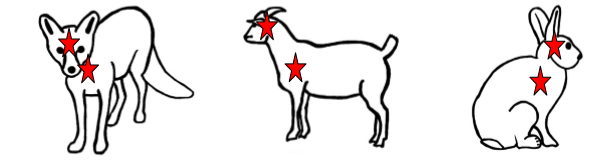
  • Side view: When you are positioned to take a shot from side-on, the key aiming point for shot placement into the head kill zone is the base of the ear.
  • Front view: When you are positioned to take a shot from front-on, shot placement depends on the angle of the animal’s head. Where the animals head is angled down towards the ground, the key point of aim is located at the intersection point of two imaginary lines drawn from each eye to the opposite ear.
  • When you are positioned to take a shot at an animal looking directly in your direction, the point of aim should be just above the centre of the nostrils.

The Chest Kill Zone

  • Side view: When you are positioned to take a shot from side-on, the key aiming point for the chest kill zone area is located in the middle of the chest just behind the shoulder joint of the animal. This area is large and contains vital organs such as the lungs and heart.
  • Front view: When you are positioned to take a shot from front-on, the key aiming point is found in the area at the base of the neck central to the legs.
  • Quartering: When you are positioned diagonally behind an animal, your aiming point should be positioned where shot placement transects the heart and the animal’s far shoulder.

Wounded animals

Ethical hunters must ensure that any unintentionally wounded animal is located as quickly as possible and that all reasonable efforts are made to deliver a rapid follow-up shot to minimise pain and suffering.

If an animal is unintentionally wounded and remains conscious—whether it collapses at the point of impact or runs a short distance before collapsing—it is the hunter’s responsibility to immediately follow up with a second shot placed into the head kill zone. A prompt follow-up shot in these circumstances minimises stress and prevents unnecessary suffering.

If an unintentionally wounded animal escapes and moves away from the point of the initial shot, the hunter must make every effort to locate it and promptly deliver one or more follow-up shots into the chest kill zone to ensure the animal is humanely killed.