Member Training & Development

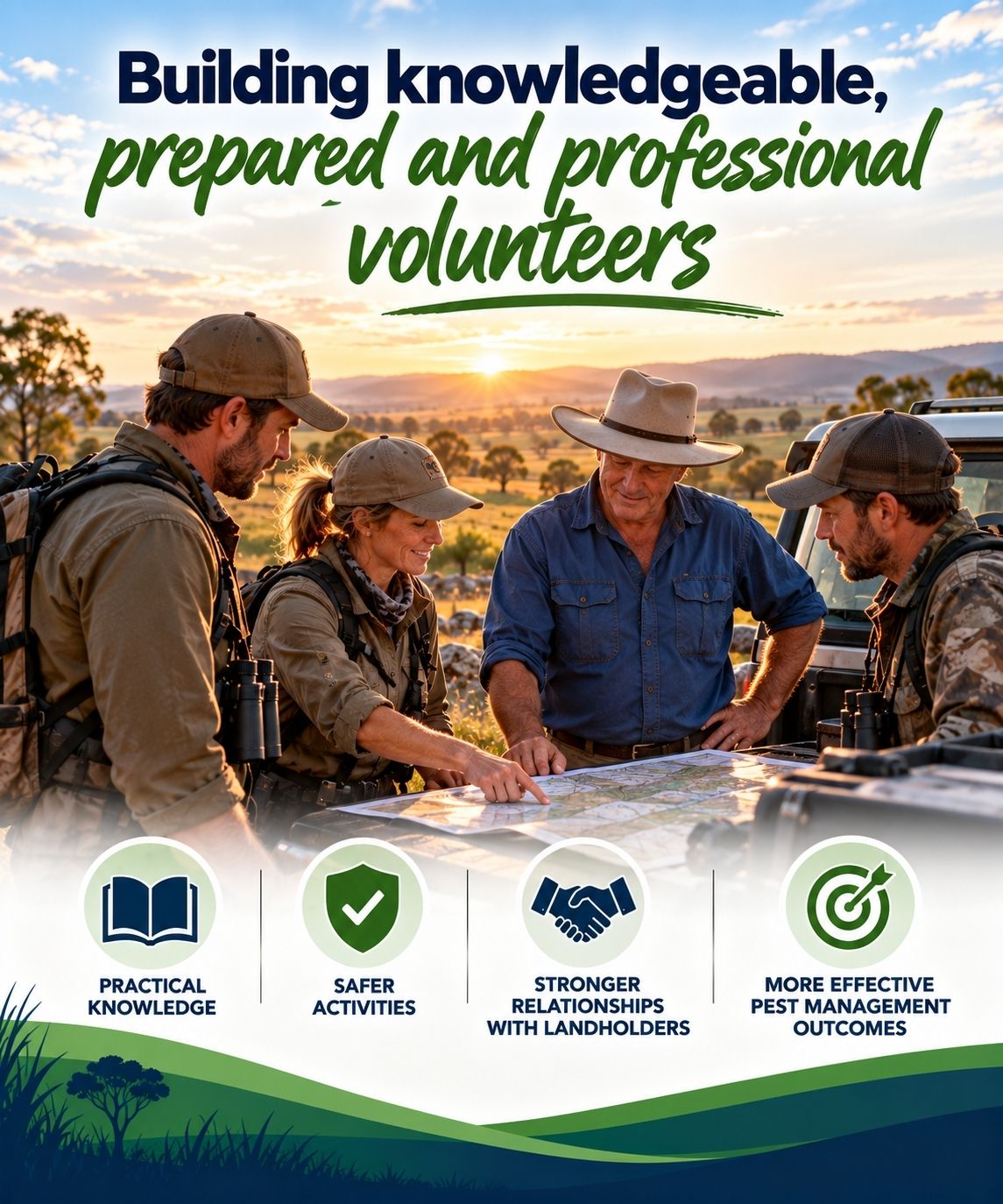
Building knowledgeable, prepared and professional volunteers

Farmer Assist connects landholders with SSAA members who volunteer their time and skills to assist with pest animal management. As the program continues to develop, so too does the need to ensure participating members have access to practical information that helps them operate safely, responsibly and professionally on rural properties.

The Farmer Assist training program has been developed to strengthen member knowledge and provide volunteers with a better understanding of the expectations associated with undertaking pest management activities on private land.

The training is designed to complement members’ existing experience—not replace it. It provides a consistent foundation of knowledge across areas that are important to landholders, volunteers and the Farmer Assist program.
Why introduce additional training?

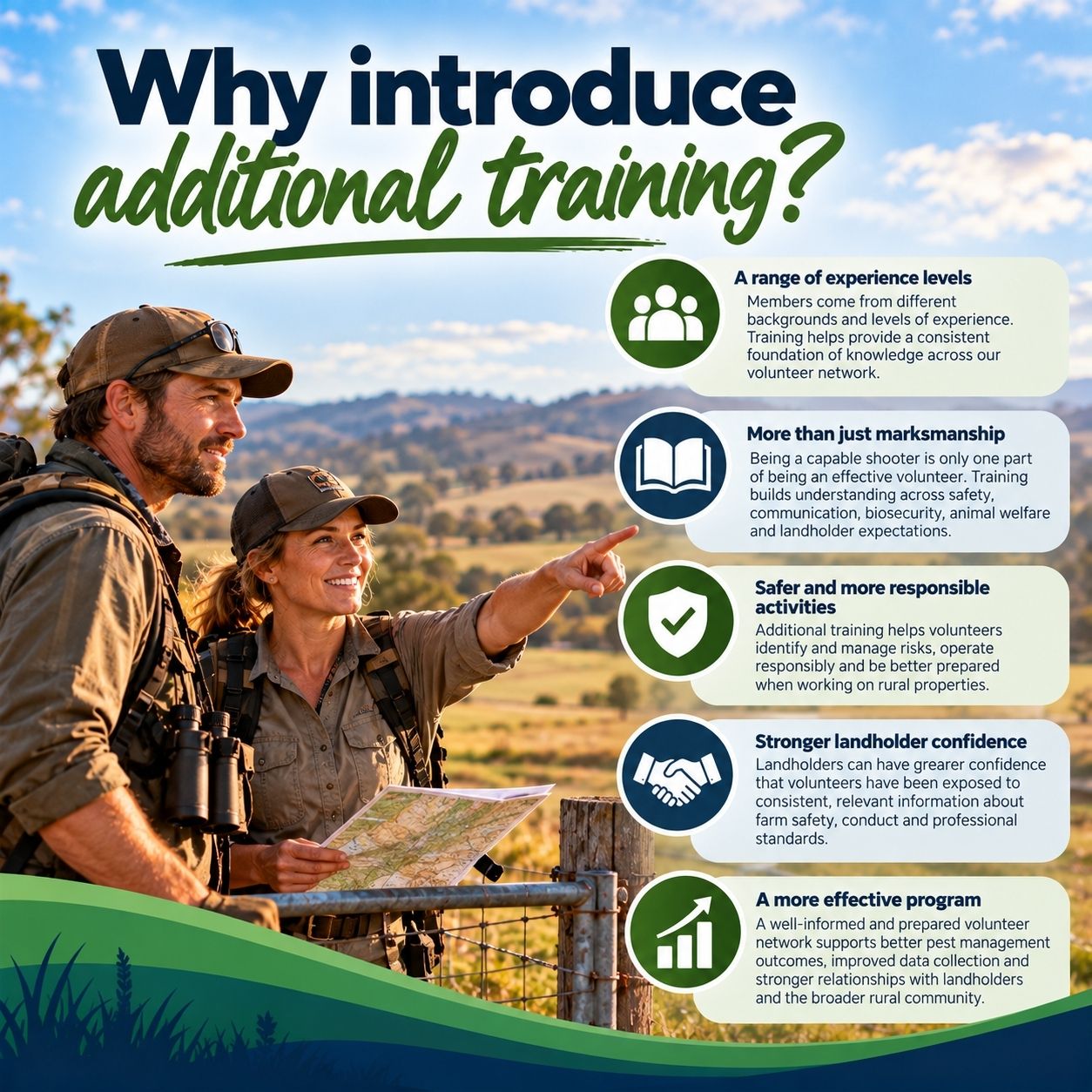
Farmer Assist volunteers come from a wide range of backgrounds and bring different levels of experience to the program. Some may have considerable experience working on farms or undertaking pest animal management, while others may have less exposure to rural workplaces and landholder expectations.

Being a capable shooter is only one part of being an effective Farmer Assist volunteer.
Successful participation also requires an understanding of property safety, communication, animal welfare, biosecurity, risk management, data collection and the responsibilities that come with being invited onto another person’s property.

Providing accessible online training allows Farmer Assist to build a more consistent level of knowledge across its volunteer network while giving members an opportunity to further develop their skills.

What are the benefits?

For members, the training provides greater understanding of what is expected when undertaking Farmer Assist activities and helps volunteers arrive better prepared for working with landholders.

For landholders, it provides additional confidence that participating volunteers have been exposed to consistent information about safety, conduct, animal welfare, biosecurity and responsible pest management.

For Farmer Assist, it helps build a volunteer network that is increasingly capable of contributing to organised, accountable and well-documented pest animal management activities.

Most importantly, training provides another way of strengthening the relationship between landholders and volunteers—the relationship on which Farmer Assist depends.

Current Farmer Assist training modules

Farmer Assist Advanced Volunteer Program

The Advanced Volunteer Program provides broader training across the knowledge and practices relevant to Farmer Assist activities.

The program covers areas including firearm safety and risk management, marksmanship and firearm proficiency, firearm preparation and transport, animal welfare and humane destruction, species identification and shot placement, landholder engagement, biosecurity, pest animal management planning, activity logging and data collection, incident management and professional standards.

Members work through the training modules and complete knowledge assessments. Successful completion is recorded within their Farmer Assist training profile and recognises them as an Advanced Volunteer.

This gives members an opportunity to demonstrate that they have undertaken additional development beyond the standard requirements for participating in Farmer Assist.

Property Safety & Site Induction Awareness

The Property Safety & Site Induction Awareness course focuses specifically on preparing volunteers to undertake activities on rural properties.

It covers general property safety responsibilities, hazards, firearms, vehicles and machinery, baits and chemicals, biological hazards, biosecurity, personal protective equipment, remote and isolated work, emergency procedures, incident reporting and professional conduct.

Successful completion records Property Safety & Induction Awareness against the member’s training profile that landholders can see.

Importantly, this training does not replace the property-specific induction provided by a landholder. Every property is different, and volunteers must still understand the particular hazards, boundaries, access arrangements, livestock, infrastructure and operating requirements relevant to the property on which they are working.

Recognising member development

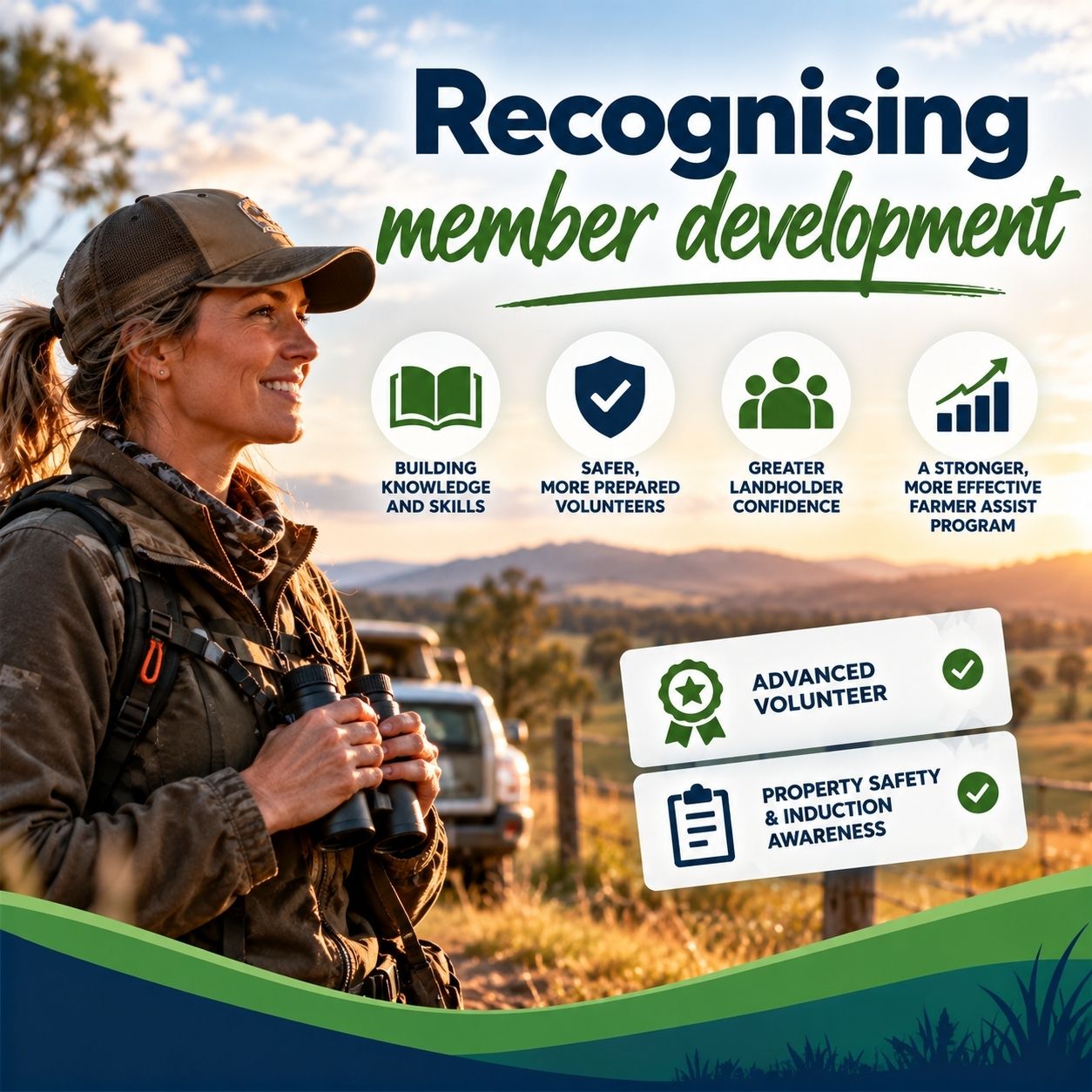
Completed Farmer Assist training will progressively be incorporated into member profiles and the information available to landholders when considering applicants for their jobs.

This allows landholders to recognise members who have voluntarily invested additional time in developing their knowledge.

For example, members who successfully complete the Advanced Volunteer Program can be identified as:

Advanced Volunteer ✓

Members who complete the property safety training can also have:

Property Safety & Induction Awareness ✓

These indicators are not intended to guarantee selection for a Farmer Assist activity. Landholders remain in control of deciding which applicants they invite onto their property. Rather, they provide another useful piece of information when considering applicants.

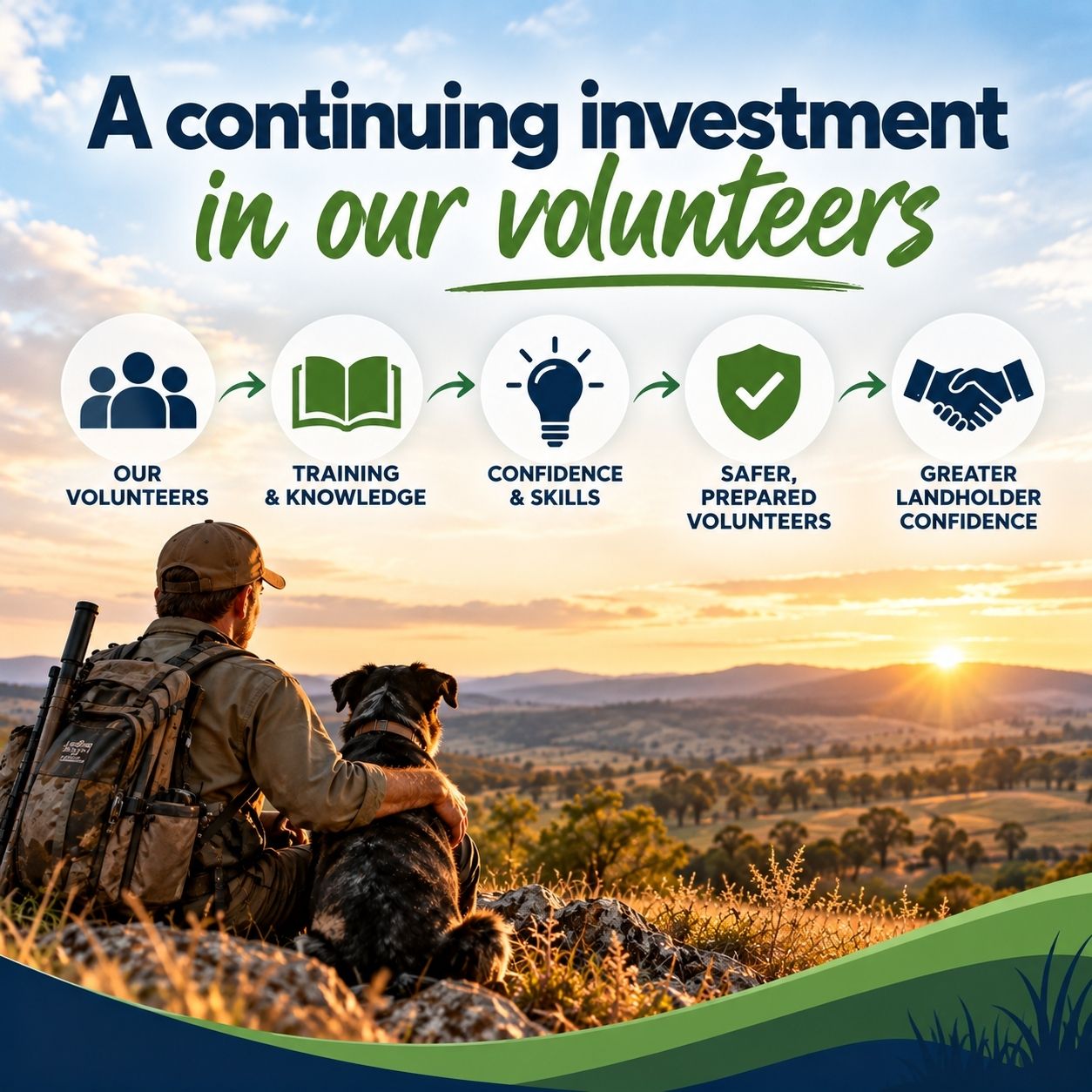
A continuing investment in our volunteers

These courses are the beginning of a broader approach to member development within Farmer Assist.

Additional training can be introduced over time as new needs are identified, allowing members to progressively build their knowledge through the My Training area of their Farmer Assist account.

The objective is straightforward: better-informed volunteers, stronger relationships with landholders, safer activities and more effective pest animal management outcomes.

Participation in additional training also gives members an opportunity to demonstrate their commitment to the standards and values Farmer Assist seeks to promote—safety, respect, professionalism, integrity and accountability.